Which HVAC Zoning System is Best?
There isn’t one best zoning system for every house. The better question is: which zoning setup fits this house best without creating new problems?
The right choice depends on three things:
1) The house and how it behaves.
Where are the comfort problems—upstairs/downstairs, sunny rooms, bedrooms at night, additions? Zones should match use and heat gain/loss patterns, not one zone per room.
2) The equipment.
A simple single-stage system can handle basic zoning in the right situation, but multi-stage, heat pumps, and variable-speed systems often need zoning controls that can manage those features. The key is keeping the equipment stable when only part of the house is calling.
3) The duct system and airflow.
Zoning changes which ducts are open at any moment, which can raise pressure and noise if the system is already tight or zones are small. So zoning isn’t just thermostats and dampers. It’s an airflow and system design decision. If the ducts or returns are restrictive, a “fancier” zoning system with pressure and temperature protection may be the best value because it prevents callbacks.
Should the House Be Zoned?
A house is a good candidate for zoning when the home naturally behaves like two (or more) different comfort zones.
Strong candidates for zoning
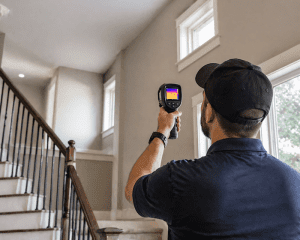
- Homes with different load patterns: Parts of the home heat up/cool down differently (big windows on one side, a sunroom, a bonus room over a garage, finished attic). If those areas consistently run hotter or colder than the rest, zoning can help because it lets the system respond differently by area.
- Multi-story homes: Upstairs and downstairs often act like separate climates. Warm air rises, and upstairs typically needs more cooling (and sometimes less heat).
- Large homes with uneven sun exposure or long duct runs: Bigger homes often have more variation. Some rooms are far from the equipment, some face direct sun, some are shaded. Zoning can help match heating/cooling to those differences.
Poor candidates (or maybe not needed)
- Small or simple homes: If the home has fairly even temperatures room-to-room, zoning may add cost and complexity without much payoff. Basic airflow adjustments and return path fixes can often solve the complaint.
Retrofit jobs need extra caution
Retrofits can work great, but they’re where zoning can also create trouble if the duct system is already tight. Before zoning, do a quick check: are returns weak, is airflow already noisy, do you suspect high static pressure, or are the proposed zones very small? If yes, zoning may still be possible, but it usually needs a better pressure plan (and sometimes duct/return improvements first).
Main Types of Zoning Systems
Here are the main types of zoning you’ll run into. The most important thing is that each type is really a different way of solving the same problem: different areas need different comfort without stressing the system.
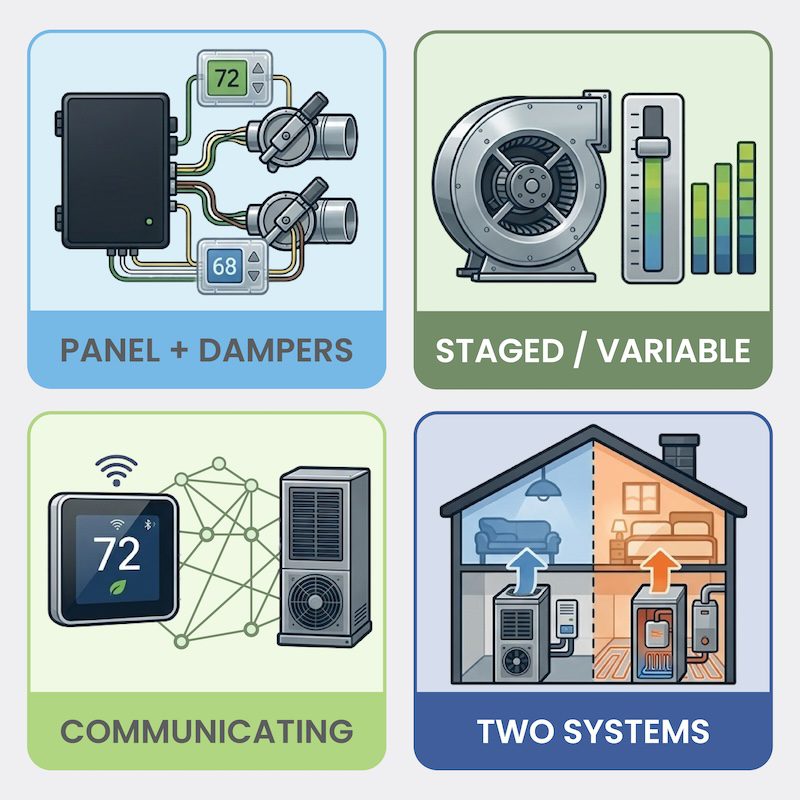
This is the classic setup: multiple thermostats, a zone control panel, and motorized dampers that open/close to direct air. It’s the most common approach for ducted systems. It works best when zones aren’t tiny, and you have a plan to keep airflow/pressure under control during small-zone calls.
Same basic idea (zones + dampers), but the equipment can run at lower output when only one zone calls. This usually delivers smoother comfort and fewer noise/pressure issues if the zoning controls are set up to use the equipment’s lower stages/capacity instead of always running full output.
These are designed to work within a matched family of equipment and controls. They can coordinate staging and airflow more smoothly and provide better diagnostics. Great performance when everything is matched, but you’re tied to that ecosystem for parts and replacements.
Sometimes the best zoning is two systems especially in large two-story homes or homes with very different loads where one duct system can’t serve everything well. Higher upfront cost, but often the most reliable long-term comfort when the house truly behaves like two climates.
Equipment Compatibility Matters
Equipment compatibility matters because it changes how the system runs when only part of the house is calling. The best zoning system is usually the one your existing equipment can support cleanly and predictably.
Single-stage vs two-stage vs variable-capacity:
Single-stage equipment tends to run at one fixed output, so zoning can be harder on comfort and airflow when only a small zone is open. Two-stage and variable-capacity equipment can run more gently, which usually makes zoning smoother and quieter. If the zoning controls can actually use those lower levels instead of forcing full output every call.
Heat pump and dual-fuel compatibility:
Heat pumps have extra control needs (mode switching and backup heat decisions). Dual-fuel adds another layer (when to switch to the other heat source). If the zoning system can’t handle that logic correctly, you can get odd operation and comfort complaints even if the dampers are installed perfectly.
Thermostat and control compatibility:
Not every thermostat and zone controller pair plays well together. The controls need to match the type of equipment and the number of heating/cooling levels. Good compatibility also means clearer setup and better diagnostics.
Damper compatibility (actuator type):
Dampers aren’t one-size-fits-all electrically. Some are powered one way and return by spring; others need power to move both directions. The zone panel has to be able to drive the damper style you’re using, or you’ll see bad damper symptoms that are really mismatched control signals.
Pick the zoning approach your equipment can run correctly, then size and control airflow so the system stays stable when zones close.
Why Airflow and Static Pressure Matter
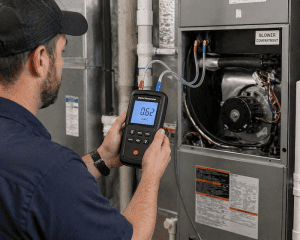
Airflow and static pressure are a big part of choosing the right zoning system because zoning doesn’t just control temperatures. It changes how air moves through the duct system every time a zone turns on. In a normal setup, most duct paths stay open. With zoning, some paths close, so the same blower may be trying to push air through a smaller opening. That’s when static pressure rises.
This matters most when you have small zones. If only a small zone is calling, there may not be enough open duct area to handle the airflow the equipment is trying to move. The result can be noise (whistling, rushing air), uneven comfort (air dumping too hard into one area or not delivering well), and equipment stress. In heating, high resistance can contribute to overheating and shutoffs. In cooling, reduced airflow can increase the chance of icing and poor performance.
So the best zoning system for a house is often the one that can keep airflow stable when zones close. If the duct system is already tight or zones are small, you usually want zoning that includes a pressure strategy (ways to prevent pressure spikes, keep enough ductwork open, and protect the equipment). If the duct system is healthy and zones are reasonably sized, a simpler zoning approach can work well.
Don’t choose zoning only by features. Choose it by whether it can manage airflow and pressure in the home’s worst-case zone call.
Bypass Dampers and Pressure Relief
Contractors bring up bypass dampers in zoning jobs because they’re trying to solve a very real problem: when zones close, the system can end up pushing air into a path that’s too small. That’s when duct pressure climbs, noise shows up, and the equipment can start acting stressed.
Why bypass comes up
In a zoned home, it’s common for only one area to call at a time, sometimes a small bedroom zone or a bonus room. Contractors consider bypass because it’s a straightforward way to calm the system down without tearing into walls or redesigning ducts.
What bypass is trying to solve
A bypass damper is a controlled shortcut between the supply duct and the return duct. When pressure rises, it opens and routes some of the air back to the return, reducing pressure in the supply ducts. It’s a pressure relief door that helps prevent the system from pushing too hard when the open zone area is limited.
Why bypass is often a compromise
Bypass doesn’t create more duct capacity, it just re-circulates air you already paid to heat or cool. If it opens a lot, you can lose comfort and efficiency because less conditioned air is reaching the rooms. It can also hide the real airflow problem (tight returns, restrictive grilles, undersized ducts), which may still need attention. So bypass can be acceptable, but it’s often a quick fix rather than the best, cleanest design.
Better alternatives (when possible)
- Better zone sizing: Combine tiny zones or design zones so the smallest call still has enough open duct area.
- Variable-capacity equipment: Systems that can “turn down” output handle small-zone calls more smoothly.
- Separate equipment: In some homes (large two-story, big load differences), two systems can be the most reliable answer.
- Better airflow strategy: Improve return paths, reduce restrictions, or use zoning controls that manage pressure by keeping a minimum amount of ductwork open or using pressure sensing.
Bypass is a tool for pressure relief, but the best zoning fits usually come from zone sizing and airflow planning first, with bypass used only when the house constraints make the cleaner options unrealistic.
Which Zoning System is Best?
The best zoning system is the one that solves the comfort problem without creating new airflow or noise issues.
1) Confirm the house has a real zoning problem
Zoning is a good fit when the home behaves like different climates. If the complaint is mostly “air doesn’t get there” or “returns are weak,” zoning may not be the first fix.
2) Check whether the duct system can support zoning
Zoning changes which ducts are open at any moment. If the duct system is already tight (noisy airflow, restrictive returns, high static history), zoning can make those symptoms worse unless you plan for pressure control or improve airflow first.
3) Match the zoning strategy to the equipment
Make sure the zoning control can handle what you’re controlling. More complex equipment usually benefits from zoning that can use those features so it doesn’t run full output into a small call.
4) Think through the smallest-zone call
Ask: “What happens when only the smallest zone calls?” That’s the stress test. If that call would leave too little open duct area, you need a better plan.
5) Choose the simplest reliable solution
If the home and ducts are friendly, a simpler panel can be fine. If it’s a tight retrofit with small zones, spend your money on pressure strategy and protection, not extra bells and whistles. The win is a system that’s quiet, stable, and doesn’t lead to callbacks.